





A Developer’s Guide to Integrating IoT into Web and Mobile Applications
Connecting devices to applications unlocks innovative solutions for developers. This IoT development guide provides clear steps for integrating IoT into web and mobile applications, offering practical insights for building reliable, secure, and scalable solutions. From understanding IoT’s role to implementing secure architectures, this guide equips developers to create effective IoT applications.
Table of Contents
Understanding IoT and its role in application development
The Internet of Things (IoT) refers to a network of physical devices—such as sensors, appliances, vehicles, wearables, and industrial equipment—embedded with software and connectivity to exchange data over the internet. In IoT application development, this connectivity enables apps to interact with devices, collect real-time data, and provide control functionalities. For example, a mobile app might adjust a smart thermostat, while a web app could display data from industrial sensors on a dashboard.
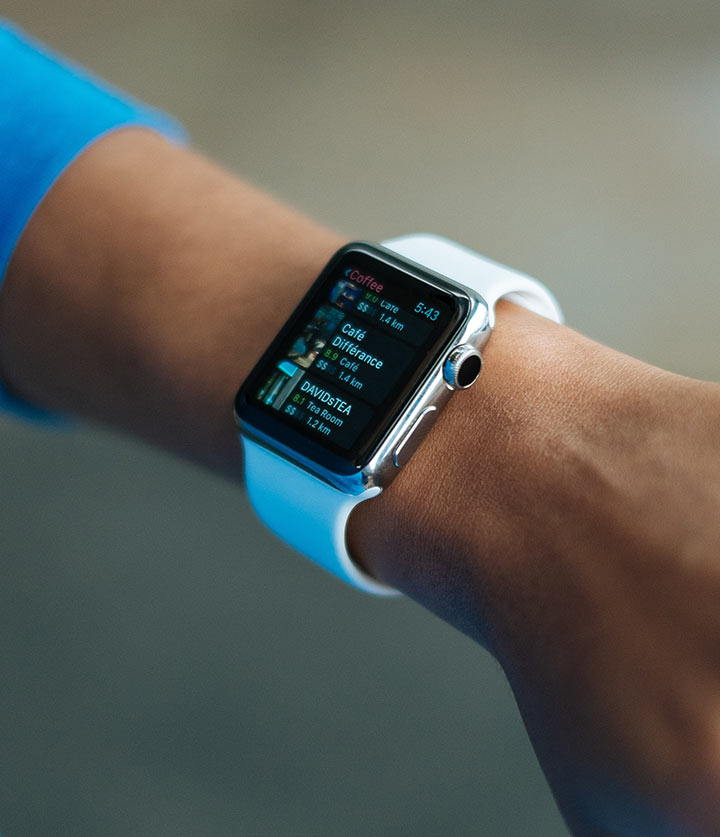
IoT app development bridges the physical and digital worlds, enabling features like remote control, real-time alerts, and location-based services in mobile apps (e.g., tracking fitness data from wearables) and centralized management interfaces in web apps (e.g., monitoring smart city infrastructure). This makes IoT pivotal for industries like healthcare, smart homes, manufacturing, agriculture, and autonomous vehicles.
Steps to integrate IoT into web and mobile applications
Incorporating IoT into applications requires a structured approach. Below are the key steps:
1. Define Clear Requirements
Start by defining functional requirements (e.g., collecting sensor data, controlling devices, sending alerts) and non-functional requirements (e.g., performance, scalability, security, usability, interoperability, regulatory compliance). For instance, a smart home app must support multiple device types (e.g., lights, thermostats), ensure low-latency control, comply with GDPR for user data, and offer an intuitive interface. For web apps, prioritize browser compatibility and responsive design for accessibility across devices.
2. Select IoT hardware and firmware
Choose hardware aligned with the app’s goals, such as DHT22 sensors for temperature/humidity or PIR sensors for motion detection. Microcontrollers (e.g., ESP32, Arduino Uno) or gateways are also common. Ensure compatibility with IoT platforms (e.g., Raspberry Pi, AWS IoT Device SDK) and communication protocols. Firmware, running on real-time operating systems (RTOS) like FreeRTOS or Zephyr, should support protocols like MQTT or CoAP and enable over-the-air (OTA) updates for maintenance and security patches.
3. Choose connectivity options
Connectivity is critical for IoT integration. Select networks based on power consumption, range, cost, data rate, and security:
- Wi-Fi: High bandwidth, short-to-medium range, suitable for smart home devices like cameras.
- Bluetooth/BLE: Low power, short range, ideal for wearables or smart locks.
- Cellular: Long range, reliable for remote applications like vehicle tracking (e.g., 4G, 5G, NB-IoT, LTE-M, 5G RedCap).
- LPWAN: Low power, long range, used for smart meters or agriculture (e.g., LoRaWAN, Sigfox).
- Zigbee, Z-Wave, Thread: Low-power protocols for smart home mesh networks.
- Matter: Emerging standard for smart home interoperability.
Use protocols like MQTT (publish/subscribe, lightweight), CoAP (low-latency, constrained devices), HTTP/HTTPS (web-based apps), AMQP (enterprise messaging), DDS (real-time systems), or LWM2M (device management). Balance latency, reliability, bandwidth, and scalability when choosing.
4. Set up data processing and storage
Establish a data flow for collection, preprocessing, and analysis. Use cloud platforms like AWS IoT, Azure IoT Hub, Google Cloud IoT Core, or open-source solutions like ThingsBoard for storage and real-time analytics. Edge computing on devices or gateways can reduce latency and cloud dependency. Ensure compliance with regulations like GDPR (data privacy) or HIPAA (healthcare). Web apps should prioritize real-time data visualization (e.g., dashboards), while mobile apps focus on lightweight processing for performance.
5. Develop the application
For mobile apps, target iOS, Android, or both using cross-platform frameworks like React Native, Flutter, or Ionic for efficiency and native-like performance. For web apps, use frameworks like React, Angular, or Vue.js to build responsive interfaces for IoT data visualization. Test thoroughly for device compatibility, performance under varying network conditions, and edge cases like intermittent connectivity. IoT app development services or SDKs (e.g., AWS IoT Device SDK) can provide pre-built components to streamline development.
Key Considerations for IoT Integration
Address these challenges for successful IoT integration:
- Security and privacy: Implement encryption, secure APIs, and regular updates to protect against cyberattacks.
- Scalability: Use modular architectures (e.g., microservices) to handle growing device numbers and data volumes.
- Interoperability: Support standard protocols (e.g., MQTT, CoAP, Matter) and open APIs (e.g., RESTful) for compatibility across ecosystems.
- User experience: Design intuitive mobile interfaces and clear web dashboards to make IoT data accessible.
Best Practices for Secure IoT Application Development
Security is paramount in IoT application development services. Follow these best practices to ensure secure app development with strong authentication and authorization:
- Strong authentication: Use OAuth 2.0 or device attestation to verify user and device identities.
- Data encryption: Apply AES-256 for data at rest and TLS for data in transit.
- Regular updates: Maintain firmware and software with OTA updates to patch vulnerabilities.
- Monitoring and Logging: Use tools like AWS CloudWatch or Splunk to detect anomalies and support security audits.
- Network segmentation: Isolate IoT devices on separate networks to reduce attack surfaces.
- Zero-Trust security: Assume no device or user is inherently trusted, requiring continuous verification.
AI in application development
The transformation of application development by AI is evident in IoT applications. AI enhances IoT applications through:
- Predictive maintenance: Machine learning models analyze sensor data to predict equipment failures (e.g., industrial machinery).
- Anomaly detection: AI identifies irregular patterns (e.g., unusual sensor readings) to prevent issues like leaks.
- Chatbots: AI-powered chatbots provide real-time support within apps (e.g., troubleshooting smart devices).
- Edge AI: Running models (e.g., TensorFlow Lite) on devices reduces latency and cloud dependency.
For example, a smart home app might use AI to optimize energy usage based on historical data.
Exploring IoT application architectures
Understanding IoT application architectures is essential for designing effective systems. A Survey on IoT Application Architectures highlights several common models:
- Centralized: Data is processed on a central server (e.g., cloud), simple but prone to bottlenecks or single points of failure.
- Decentralized: Edge or fog computing processes data closer to devices, reducing latency but increasing complexity.
- Hybrid: Combines edge processing for critical data and cloud storage for historical data, balancing speed and scalability.
Choose based on latency, data volume, and reliability needs. For example, a smart city app might use a hybrid model to process traffic data locally while storing analytics in the cloud.
This guide provides a roadmap for integrating IoT into web and mobile applications, enabling developers to build secure, scalable, and user-friendly web application development solutions enhanced by AI and optimized architectures. IoT app development services and SDKs can accelerate development. Whether for mobile or web, IoT empowers innovative, connected experiences.
FAQs
Q1. What is IoT integration in web and mobile applications?
IoT integration connects smart devices to apps for data exchange, remote control, and real-time monitoring.
Q2. Which programming languages and frameworks are commonly used for IoT development?
Languages include Python, JavaScript, C/C++, Java, Go, and Rust. Platforms and frameworks include Node.js, Arduino (platform), FreeRTOS, Zephyr, and cloud solutions like AWS IoT. MQTT and CoAP are key protocols, not frameworks.
Q3. How can developers ensure security while integrating IoT with applications?
Use encryption (AES-256, TLS), secure APIs, OAuth 2.0, regular updates, network segmentation, and zero-trust models.
Q4. What are some real-world use cases of IoT in web/mobile apps?
Examples include smart home control, fitness trackers, vehicle tracking, industrial dashboards, healthcare wearables, and smart agriculture.
Q5. What challenges do developers face during IoT integration, and how can they overcome them?
Challenges include device compatibility, data management, latency, and security. Solutions include standard protocols (e.g., MQTT, Matter), edge computing, and robust testing.

Author