







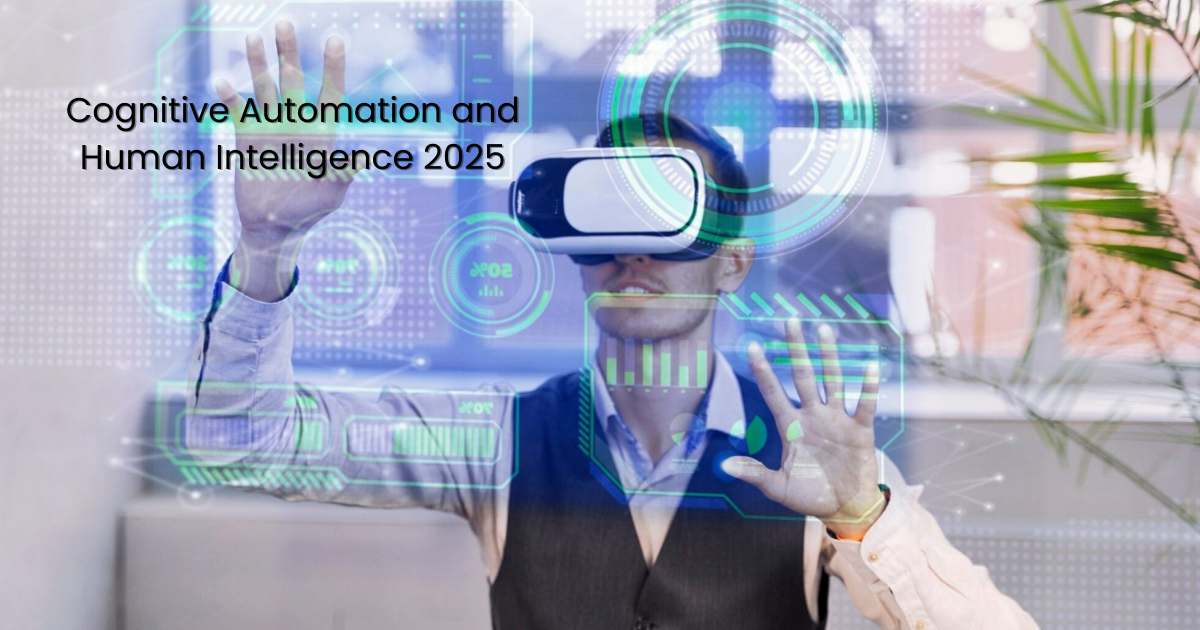
Cognitive AI and Human Intelligence 2026
Artificial intelligence (AI) has evolved significantly over the past decades. From its early days of rule-based systems, AI has progressed into a powerful force that enhances human capabilities. In 2026, we are witnessing the rise of AI 2.0—a paradigm where cognitive automation and human intelligence converge to create smarter, more efficient solutions across various industries.
Historical evolution of AI
The genesis of AI 2.0 is deeply rooted in its historical evolution. The early days of AI were marked by boundless optimism, but this enthusiasm gave way to the so-called “AI winter” when progress stagnated. It wasn’t until the resurgence of AI, propelled by neural networks and deep learning that we entered the era of AI 2.0. This renaissance breathed new life into AI, ushering in a wave of possibilities, including the seamless integration of human intelligence with machine capabilities.
Key technologies driving AI 2.0
AI 2.0 is characterized by several key technologies that enable machines to perform tasks that traditionally required human intelligence:
- Neural networks: These are computational models inspired by the human brain, capable of recognizing patterns and making predictions.
- Deep learning: A subset of machine learning that uses multi-layered neural networks to model complex patterns in large datasets.
- Reinforcement learning: A type of machine learning where agents learn to make decisions by performing actions and receiving feedback from their environment.
- Natural language processing (NLP): Enables machines to understand and respond to human language, facilitating more natural interactions.
- Generative AI: AI systems that can generate new content, such as text, images, or music, based on learned patterns.
These technologies, combined with advanced hardware like graphics processing units (GPUs) and tensor processing units (TPUs), empower AI systems to process vast amounts of data and perform complex tasks with high efficiency.
Ai 2.0: A profound paradigm shift
AI 2.0 represents a significant shift from traditional automation. While earlier AI systems focused on automating repetitive tasks, AI 2.0 emphasizes human augmentation. This means that AI systems are designed to complement human abilities, enhancing decision-making, creativity, and problem-solving. In this new paradigm, humans and machines collaborate seamlessly, leveraging each other’s strengths to achieve outcomes that neither could accomplish alone.
Real-world applications
AI 2.0 is already making a significant impact across various industries:
- Finance: AI-driven algorithms are revolutionizing risk assessment and portfolio management, leading to more accurate predictions and optimized investment strategies.
- Healthcare: AI applications in diagnostics, personalized medicine, and patient care are improving outcomes and efficiency in healthcare delivery.
- Agriculture: AI-powered drones and sensors are enabling precision farming, optimizing crop yields, and reducing resource usage.
- Manufacturing: AI systems are enhancing supply chain management, predictive maintenance, and quality control in manufacturing processes.
- Retail: AI is transforming customer experiences through personalized recommendations, inventory management, and demand forecasting.
For deeper insights, check our post on AI in 2026 anticipates trends and challenges.
The technology behind AI 2.0
The advancements in AI 2.0 are underpinned by several technological developments:
- Explainable AI (XAI): As AI systems become more complex, it’s crucial to understand how they make decisions. XAI aims to make AI decision-making processes transparent and understandable to humans.
- Federated learning: This approach allows AI models to be trained across multiple decentralized devices without sharing data, enhancing privacy and security.
- Edge AI: Processing data closer to the source, such as on devices like smartphones or IoT devices, reduces latency and bandwidth usage, enabling real-time decision-making.
- Quantum computing: Although still in its early stages, quantum computing holds the potential to solve complex problems much faster than classical computers, accelerating AI advancements.
Challenges and risks
Despite its potential, AI 2.0 presents several challenges:
- Bias in AI algorithms: AI systems can inherit biases present in training data, leading to unfair or discriminatory outcomes.
- Cybersecurity threats: As AI systems become more integrated into critical infrastructure, they become attractive targets for cyberattacks.
- Job displacement: Automation of tasks traditionally performed by humans can lead to job losses, necessitating strategies for workforce transition and upskilling.
- Ethical concerns: The deployment of AI in sensitive areas raises ethical questions about accountability, privacy, and decision-making.
Learn more from the hidden challenges in testing machine learning.
Navigating the regulatory landscape
To address these challenges, governments and organizations are developing frameworks to ensure the responsible use of AI:
- European AI act: The European Union has proposed regulations aimed at ensuring AI systems are transparent, accountable, and respect fundamental rights.
- AI ethics guidelines: Various organizations are developing ethical guidelines to govern AI development and deployment, focusing on fairness, transparency, and accountability.
- International collaboration: Countries are collaborating to establish global standards and norms for AI, addressing issues like data privacy, security, and ethical considerations.
Global Perspectives on AI 2.0
AI 2.0 is a global phenomenon, with different regions leading in various aspects:
- United States: Home to many leading AI research institutions and tech companies, the U.S. is at the forefront of AI innovation.
- China: With significant investments in AI research and development, China is rapidly advancing in AI technologies and applications.
- European Union: The EU is focusing on establishing ethical guidelines and regulations to ensure responsible AI development.
- India: India is leveraging AI to address challenges in sectors like agriculture, healthcare, and education, aiming for inclusive growth.
Public perception and acceptance
Public perception of AI varies across regions and demographics. While many recognize the benefits of AI, concerns about job displacement, privacy, and control persist. Building trust in AI requires transparency, education, and active engagement with communities to address their concerns and ensure AI technologies are developed and deployed responsibly.
Leveraging the ocean of big data
AI 2.0 thrives on big data. The vast amounts of data generated daily provide the raw material for training AI models. However, ethical considerations around data collection, privacy, and security are paramount. Implementing robust data governance frameworks ensures that data is used responsibly and in compliance with regulations.
For strategies on workplace optimization using AI, see implement AI solutions to address fragmentation in the workplace.
Looking ahead
The future of cognitive automation and human intelligence is promising. As AI 2.0 continues to evolve, it will unlock new possibilities for innovation, efficiency, and problem-solving across sectors. Embracing this future requires collaboration between governments, industries, and communities to harness the potential of AI while addressing its challenges.
Organizations can gain a competitive edge by partnering with experts like Novas Arc to implement AI-driven automation in the management of middleware and leverage business value thrives with generative AI.
FAQs
1. What is cognitive automation in AI 2.0?
Cognitive automation uses AI technologies like NLP and machine learning to replicate human decision-making and enhance efficiency.
2. How does AI 2.0 enhance human intelligence?
AI 2.0 augments human capabilities by providing insights, automating repetitive tasks, and supporting complex decision-making.
3. Which industries benefit most from cognitive automation in 2026?
Finance, healthcare, agriculture, manufacturing, and retail are leading sectors leveraging AI 2.0 for smarter operations.
4. What are the main challenges of AI 2.0?
Key challenges include bias in algorithms, cybersecurity risks, ethical concerns, and workforce adaptation to automation.

cannabis
July 19, 2025Nice
Novas Arc
July 20, 2025Thank you! Check out our other blogs too.
Regards,
Novas Arc