








The 2026 Zero Trust roadmap: Securing enterprises against evolving threats
Cyberattacks continue to rise year over year, according to Verizon’s Data Breach Investigations Report (DBIR).
Key takeaways
| Area | Insight | Action |
|---|---|---|
| Security model | Perimeter security fails in distributed systems | Adopt Zero Trust architecture |
| Identity | Identity is the new control plane | Enforce MFA and least privilege |
| Remote work | VPNs increase exposure | Deploy Zero Trust Network Access (ZTNA) |
| Compliance | US frameworks demand stronger controls | Align with NIST SP 800-207 |
| Threats | AI-driven attacks scale rapidly | Use continuous monitoring |
What is Zero Trust security and why it matters in 2026
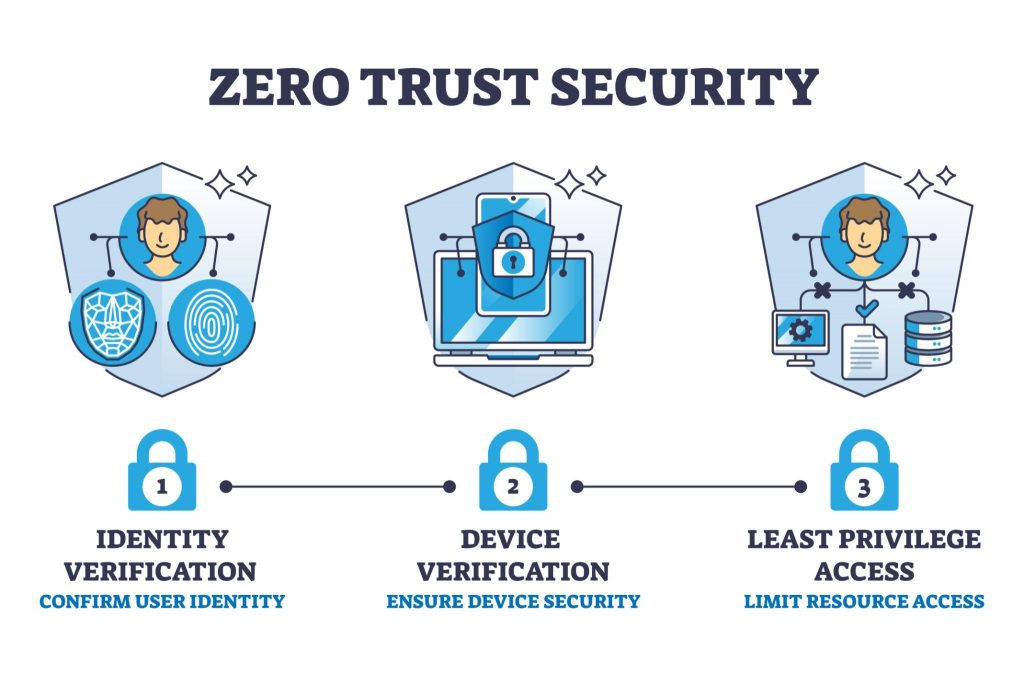
Zero Trust Security verifies every user, device, and request before granting access. This model removes implicit trust from enterprise environments.
Attackers target identity systems using automated tools. Zero Trust limits access continuously and reduces breach impact.
Why enterprises adopt Zero Trust:
- Prevent unauthorized access
- Limit lateral movement
- Protect sensitive data
- Secure hybrid work environments
- Meet US compliance expectations
How does Zero Trust architecture differ from traditional security models
Traditional security models trust users inside the network perimeter. This approach increases risk after initial access.
Zero Trust Architecture verifies every request regardless of location. It enforces least privilege access across systems.
Key differences:
- Perimeter trust vs identity verification
- Broad access vs least privilege
- Static controls vs continuous validation
- Network focus vs data-centric protection
What are the key components of a Zero Trust implementation strategy
A Zero Trust implementation strategy uses layered security controls. Each layer validates identity, device, and access context.
Core components:
- Identity and access management (IAM):
Enforce MFA and adaptive authentication - Device security:
Validate endpoint posture before access - Network segmentation:
Isolate systems to reduce lateral movement - Zero Trust Network Access (ZTNA):
Provide application-level access only - Data protection:
Encrypt data and enforce strict access policies - Continuous monitoring:
Detect anomalies using behavioral analytics
What challenges do enterprises face when adopting Zero Trust frameworks
Enterprises face operational and technical barriers during adoption. Legacy infrastructure slows implementation and increases risk.
Organizations that analyze the real cost of legacy servers vs. cloud often accelerate modernization decisions.
Security teams also face skill gaps in Zero Trust models.
Common challenges:
- Legacy systems lack compatibility
- User friction impacts workflows
- Limited Zero Trust expertise
- Tool integration complexity
- Budget constraints
How can organizations build a Zero Trust roadmap for 2026
Organizations must align Zero Trust controls with global regulations such as the General Data Protection Regulation (GDPR) to ensure data privacy and governance.
Enterprises that align with an enterprise cloud security & sovereignty roadmap achieve stronger cloud security consistency.
Execution steps:
- Assess current security posture
- Identify critical assets and data flows
- Implement identity-first controls
- Replace VPNs with ZTNA
- Segment networks into micro zones
- Enable continuous monitoring
- Align with compliance frameworks
US enterprises should follow NIST SP 800-207 for Zero Trust architecture guidance.
US agencies like NIST and CISA recommend Zero Trust adoption.
What role does Zero Trust Network Access (ZTNA) play in securing remote workforces
ZTNA secures remote access without exposing enterprise networks. It connects users directly to applications based on identity.
This model reduces attack surfaces significantly.
ZTNA benefits:
- Eliminates network-level exposure
- Verifies identity and context continuously
- Prevents lateral movement
- Improves visibility into access patterns
- Supports hybrid workforce models
How do cybersecurity trends in 2026 influence Zero Trust strategies

Cybersecurity trends directly shape Zero Trust strategies. Attackers use AI to automate and scale attacks.
Identity becomes the primary security control layer. Organizations that follow database migration without data loss practices strengthen data protection during system changes.
Key trends:
- AI-driven threat automation
- Identity-first security models
- Cloud-native infrastructure growth
- Automated detection and response
- Expanding US compliance requirements
Zero Trust best practices 2026
Organizations must enforce consistent security controls.
Best practices:
- Apply least privilege access across systems
- Enforce multi-factor authentication
- Monitor user and device behavior continuously
- Encrypt sensitive enterprise data
- Automate threat detection and response
- Conduct regular security audits
Summary
- Zero Trust removes implicit trust from enterprise systems
- Identity-based access reduces breach impact
- ZTNA replaces VPNs for secure access
- Continuous monitoring improves threat detection
- NIST SP 800-207 guides Zero Trust implementation
Zero Trust roadmap 2026 defines modern enterprise security strategy. Threats evolve faster than traditional defenses.
Organizations that implement Zero Trust reduce risk and improve resilience. Early adoption strengthens security posture and compliance readiness.
FAQs
- What is Zero Trust Security and why is it essential for enterprises in 2026?
Zero Trust Security verifies every user, device, and request before granting access. Enterprises now operate across cloud systems and remote environments. These increase attack surfaces.
Zero Trust reduces risk by enforcing continuous verification and least privilege access. It aligns with standards like NIST SP 800-207.
2. How does Zero Trust Architecture differ from traditional network security models?
Zero Trust Architecture does not trust users based on network location. Traditional models trust users inside the network perimeter. Zero Trust verifies every request using identity, device, and context.
Key differences:
- No implicit trust
- Continuous verification
- Least privilege access
Stronger breach containment
3. What are the key components of a Zero Trust implementation strategy?
A Zero Trust implementation strategy uses multiple security layers.
Core components include:
- Identity and access management (IAM)
- Multi-factor authentication (MFA)
- Device security validation
- Network segmentation
- Zero Trust Network
- Access (ZTNA)
- Continuous monitoring
These components enforce strict access control.
4. What challenges do enterprises face when adopting Zero Trust frameworks?
Enterprises face integration and operational challenges. Legacy systems often lack compatibility with modern security models.
Common challenges include:
- Legacy infrastructure limitations
- User experience friction
- Skill gaps in security teams
- Tool integration complexity
- Budget constraints
A phased rollout helps address these issues.
5. How can organizations build a Zero Trust roadmap for 2026?
Organizations build a Zero Trust roadmap by following a structured approach.
Key steps include:
- Assess current security posture
- Identify critical assets
- Implement identity-first controls
- Replace VPNs with ZTNA
- Segment networks
- Enable continuous monitoring
- Align with NIST SP 800-207
This approach ensures scalable security.
6. What role does Zero Trust Network Access (ZTNA) play in securing remote workforces?
ZTNA secures access by connecting users directly to applications. It avoids exposing the entire network like traditional VPNs.
ZTNA verifies identity, device health, and context before granting access.
Key benefits:
- Reduces attack surface
- Prevents lateral movement
- Improves access control
Supports remote work security
7. How do cybersecurity trends in 2026 influence Zero Trust strategies?
Cybersecurity trends push enterprises toward identity-based security. Attackers use AI to automate and scale attacks.
Key trends include:
- AI-driven cyber threats
- Identity as the security perimeter
- Cloud-native infrastructure
- Automated threat detection
- Increasing compliance requirements
Zero Trust aligns with these trends.

Author